"The final CR-X model that offered the thrill of open-top driving."
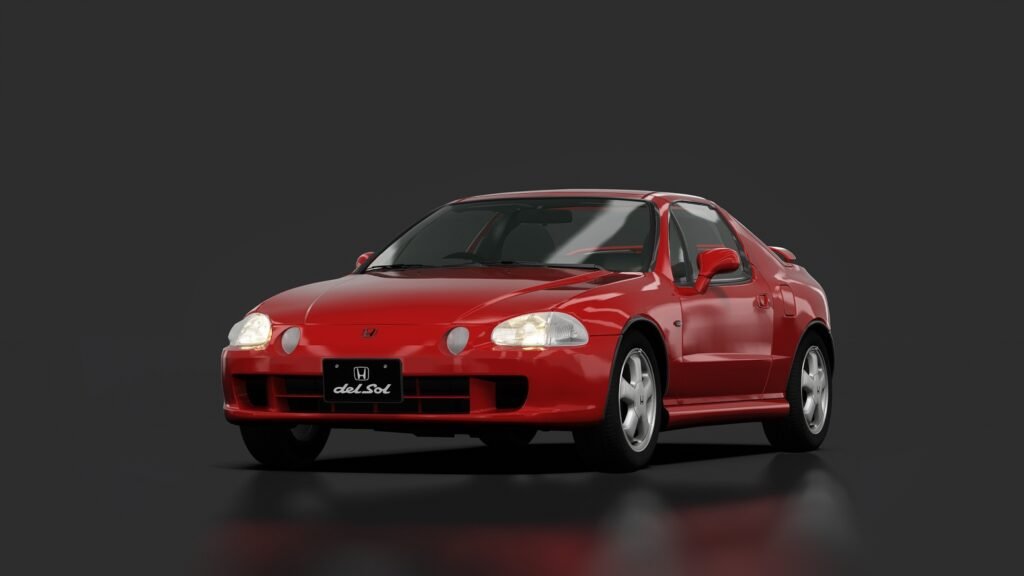
The CR-X, after pioneering the world of front-wheel-drive sports cars, underwent a complete model change in 1992, under the "Del Sol" name.
The conventional CR-X was the poster child for compact front-wheel-drive sports cars, designed to deliver the ultimate in driving performance. While it boasted agile handling, it was also a bit twitchy. This mix of strengths and weaknesses was one of the CR-X’s defining characteristics.
Meanwhile, in the early 1990s, young people began to lose interest in sports cars. Noticing this, Honda decided to reposition the CR-X. Setting aside its serious, no-nonsense driving image, they sought to transform it into a car that drivers could have fun in.
As a result, the third model was designed as a convertible, with a roof that could be stowed in the rear. In the top-of-the-line Trans-top model, it featured a fully automated retractable roof. Although the rear seats were removed, making it a two-seater, the overall length was increased by more than 7.8 inches compared to previous models to accommodate the roof storage. While its predecessor weighed around 900 kg, the weight…
“The final CR-X model that offered the thrill of open-top driving.”
The CR-X, after pioneering the world of front-wheel-drive sports cars, underwent a complete model change in 1992, under the “Del Sol” name.
The conventional CR-X was the poster child for compact front-wheel-drive sports cars, designed to deliver the ultimate in driving performance. While it boasted agile handling, it was also a bit twitchy. This mix of strengths and weaknesses was one of the CR-X’s defining characteristics.
Meanwhile, in the early ’90s, young people began to lose interest in sports cars. Noticing this, Honda decided to reposition the CR-X. Setting aside its serious driving image, they sought to transform it into a car that drivers could enjoy.
As a result, the third model was designed as a convertible, with a roof that could be stowed in the rear. The top-of-the-line model, the Trans-top, featured a fully automated retractable roof. Although the rear seats were omitted, making it a two-seater, the overall length was increased by more than 7.8 inches compared to previous models to accommodate the roof storage. While its predecessor weighed around 900 kg, the Trans-top’s weight increased to 1.1 tons.
The only remaining feature, perhaps due to Honda’s pride, was the powerful engine. The 1.6L VTEC from the previous generation was used in the SiR, with maximum output increased to 168 BHP. The standard VXi grade had a 128-horsepower 1.5L engine, but it was replaced with a 1.6L in 1996 and the model name was changed to VGi. While the Del Sol model was a drastic transformation, it was unable to revitalize and overcome the image of its predecessors. As a result, the third generation became the final model of the CR-X, and production was discontinued.
1.27 update:
-Add refractions
-Switch to factory wheels
-Rewrite IRL Carpaint
-Adjust materials









![Nissan Skyline GT-R [R32] Raijin](https://brasilsimulatormods.com/wp-content/uploads/2025/02/preview-102-670x372.jpg)



 Português do Brasil
 English
 Türkçe
 Español de Argentina
 Русский