In 1988, Jaguar showed a prototype of a new exotic sports car at the Birmingham Motor Show. It was called the XJ220, and the car would see production a few years later, becoming one of the fastest machines on the planet. The "220" in its name was a reference to the car's claimed top speed of 220 mph (354 km/h).
The production of the XJ220 was the result of a joint venture with Jaguar Sports and TWR (Tom Walkinshaw Racing). TWR developed the Jaguar Group C race car, and was in charge of its racing team at the time.
Under the sleek hood of the prototype car was a naturally-aspirated V12, but the production model came powered by a twin-turbocharged 3.5-liter V6 that produced 542 BHP at 7000 rpm, making it more powerful than the twelve-cylinder. And because it was lighter, the car's handling saw dramatic improvements. The chassis was composed of an aluminum honeycomb and carbon Kevlar composite, which made the entire car very lightweight.
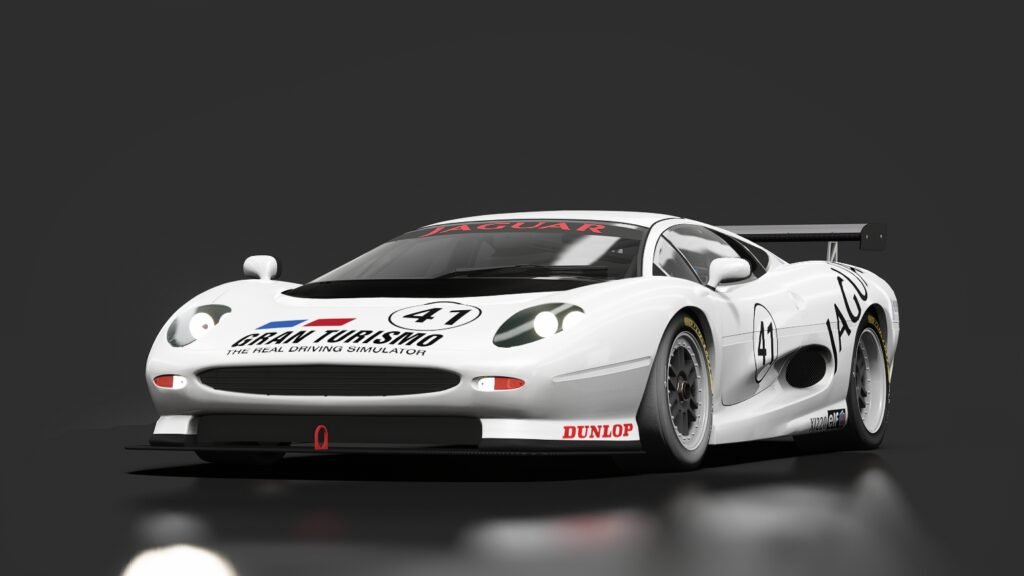
In 1993, Jaguar entered a race-prepped XJ220 in the GT-class of the 24 Hours of Le Mans. The driving duties were shared by David Coulthard, David Brabham, and John Nielsen. They took 1st in...
In 1988, Jaguar showed a prototype of a new exotic sports car at the Birmingham Motor Show. It was called the XJ220, and the car would see production a few years later, becoming one of the fastest machines on the planet. The “220” in its name was a reference to the car’s claimed top speed of 220 mph (354 km/h).
The production of the XJ220 was the result of a joint venture with Jaguar Sports and TWR (Tom Walkinshaw Racing). TWR developed the Jaguar Group C race car, and was in charge of its racing team at the time.
Under the sleek hood of the prototype car was a naturally-aspirated V12, but the production model came powered by a twin-turbocharged 3.5-liter V6 that produced 542 BHP at 7000 rpm, making it more powerful than the twelve-cylinder. And because it was lighter, the car’s handling saw dramatic improvements. The chassis was composed of an aluminum honeycomb and carbon Kevlar composite, which made the entire car very lightweight.
In 1993, Jaguar entered a race-prepped XJ220 in the GT-class of the 24 Hours of Le Mans. The driving duties were shared by David Coulthard, David Brabham, and John Nielsen. They took 1st in class. But a month later, the XJ220 was disqualified from that race due to an exhaust gas violation, and its victory was nullified.










 Português do Brasil
 English
 Türkçe
 Español de Argentina
 Русский